Back in 2015, 2 years into growing a large garden at my current property, I wrote a post about the early signs of tomato-potato psyllid infestation, with lots of great photos for easy identification, and info about the pest and how it had affected my garden etc. I'd encourage you to stop and read that article first, then come back here. Unless you know what to look for, most folk don't realise they have a problem until it's way too late. The below pics can be seen more clearly on the above post.
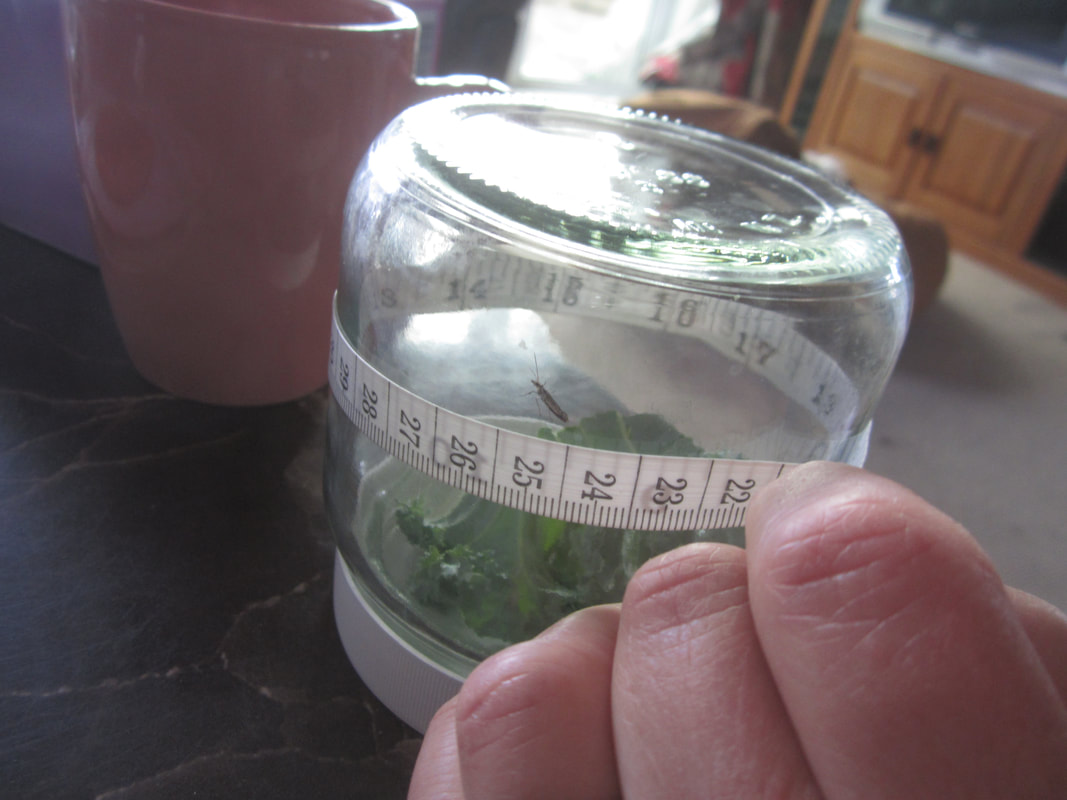
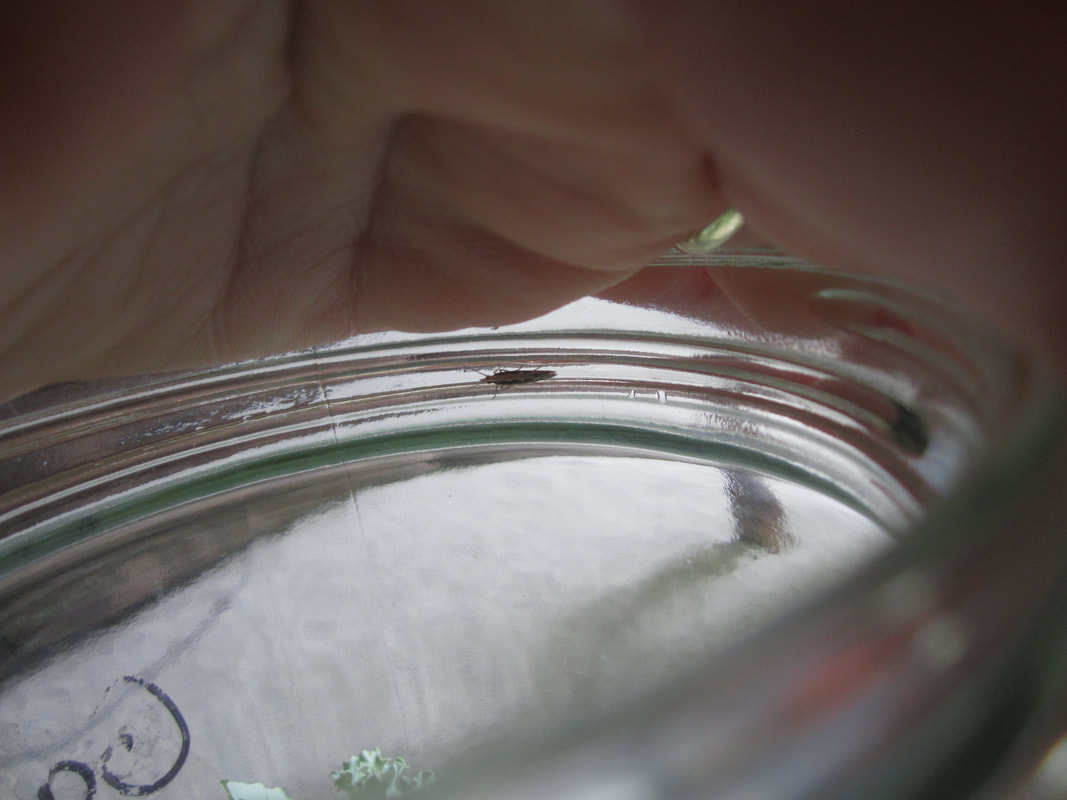
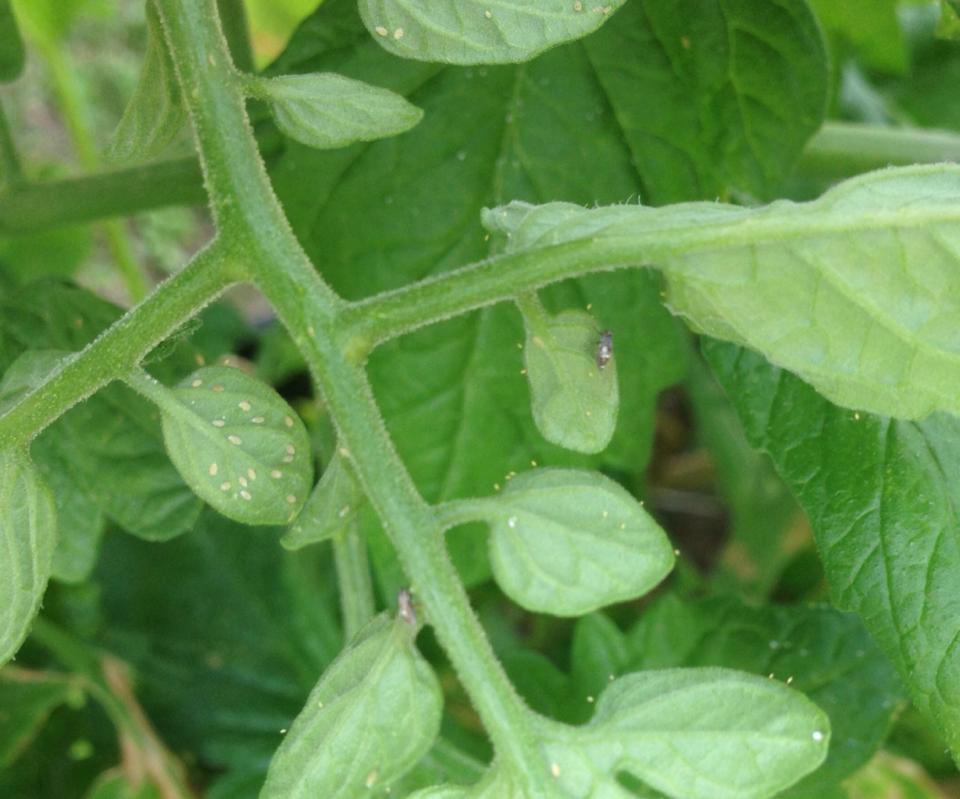 TPP nymphs, eggs and adults are all visible in this picture. | 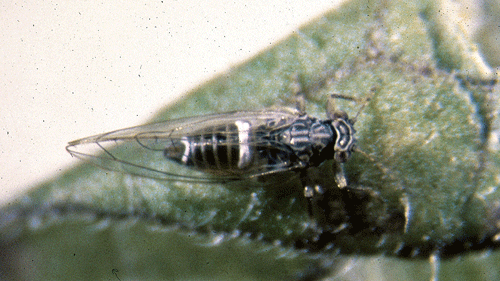 An adult psyllid is very fast moving and only 2mm long, so hard to spot. They look like a minature cicada with a white stripe across their back, but due to their size when you're looking for them, seem more like gnats darting about. | 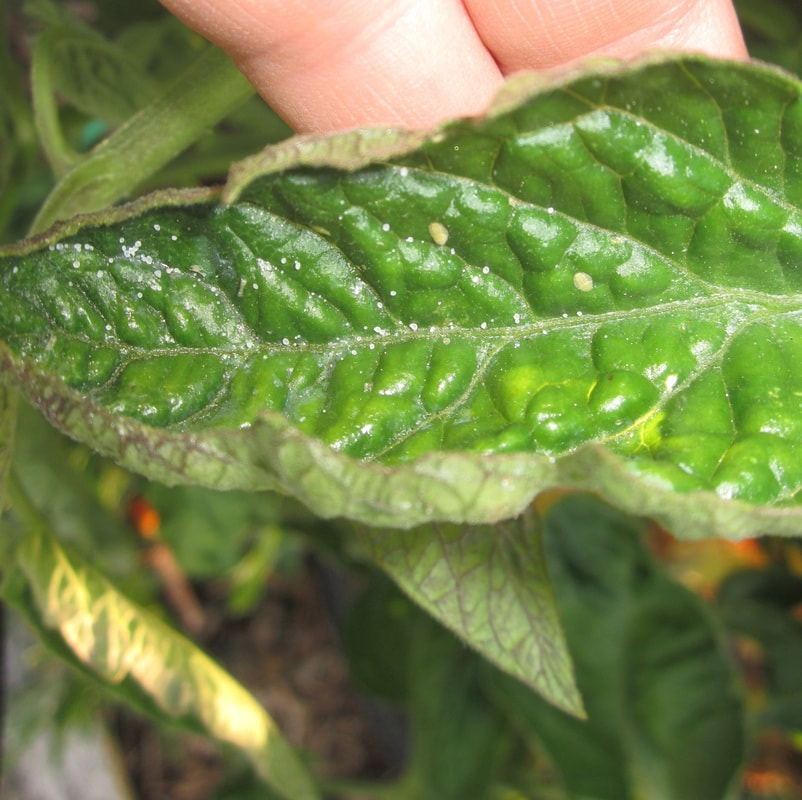 Older nymphs turn yellow (the young ones are pale green). These and "psyllid sugars" (their excreta) can be seen on this leaf. |
Since I wrote that article, I have learned a great deal. At the time, overcoming psyllid seemed a very difficult proposition, and the chances of getting decent crops of potatoes, tomatoes, peppers, capsicum, eggplant, tamarillos, cape gooseberries or even kumara (all things affected by TPP) without extreme measures seemed remote. However, armed with a garden diary, good observation skills, some research skills, patience and willingness to experiment, within 3 years I got to the point where TPP was no longer of any real concern to me in my garden. For example, last season, I harvested 30kg of large potatoes from a 3x1 metre plot - using no sprays, covers or treatments of any kind. I harvested 80kg of tomatoes from a 4x1m bed, and more from my greenhouse. And so on.
I will outline the things that I have tried/done, and what has worked for me. Note that these are things that worked for ME - there is no guarantee all the same things will be successful for you, but the following should give you some food for thought and a starting place in figuring out what does work for you. Your garden, your local climate and personal microclimate, financial resources, willingness/ability to use certain measures etc, will all affect the options and outcomes.
The main point of this article is to give you hope! Having your crops wiped out by psyllid one year does not mean that they are forever doomed!
I will outline the things that I have tried/done, and what has worked for me. Note that these are things that worked for ME - there is no guarantee all the same things will be successful for you, but the following should give you some food for thought and a starting place in figuring out what does work for you. Your garden, your local climate and personal microclimate, financial resources, willingness/ability to use certain measures etc, will all affect the options and outcomes.
The main point of this article is to give you hope! Having your crops wiped out by psyllid one year does not mean that they are forever doomed!
The beginnings of my "fight" against psyllid...
In late 2012, I decided to start growing an edible garden here. I set an audacious goal - to grow 1000kg of food within 12 months. I had almost no established gardens, limited resources, lots of hungry mouths, and multiple food allergies in the family - these things were a big part of my motivation, and setting a big goal is how I know I make the most progress. I documented that journey in early blog pages. Part of the "rules" I set to help me make this happen included keeping a detailed garden diary, which I did - including what was planted, when and where, how it did, the weights of all harvests, moon cycles, weather patterns, temperatures, and other observations. I haven't kept quite such a detailed diary since, but the process of doing it taught me a lot, gave me many reference points to refer back to, and my later diaries were very helpful in multiple ways. One of the best things about keeping a diary is that it helps force/focus you to make and record specific observations, and give you records you can look back upon to compare. One of my other rules was to "give anything a go" - if I was given it or could source something free or cheap, I'd have a go at growing or using it, not worrying about the "rules" around how to go about it unduly (as my perfectionist tendencies could otherwise lead to procrastination, and less growing).
One of the experimental crops I grew in early 2013 was no-dig potatoes. I mowed a patch of lawn, laid down newspaper, spread a little compost, set out the seed potatoes, covered in more compost and mulched thickly with hay. They seemed to grow well, until the early part of the year, when they all suddenly died off very quickly, and the resulting crop was only marble sized spuds. I put this down at the time to the method not working well, but in hindsight later, I realised this crop was very likely infested by TPP, something I didn't hear anything about until over a year later. Sudden yellowing of leaves and only tiny potatoes are a couple of the classic signs of some psyllid-borne disease. I find with psyllid, until folk know what to look for, most don't recognise it (which is why I wrote my post with lots of pics linked above).
One of the experimental crops I grew in early 2013 was no-dig potatoes. I mowed a patch of lawn, laid down newspaper, spread a little compost, set out the seed potatoes, covered in more compost and mulched thickly with hay. They seemed to grow well, until the early part of the year, when they all suddenly died off very quickly, and the resulting crop was only marble sized spuds. I put this down at the time to the method not working well, but in hindsight later, I realised this crop was very likely infested by TPP, something I didn't hear anything about until over a year later. Sudden yellowing of leaves and only tiny potatoes are a couple of the classic signs of some psyllid-borne disease. I find with psyllid, until folk know what to look for, most don't recognise it (which is why I wrote my post with lots of pics linked above).
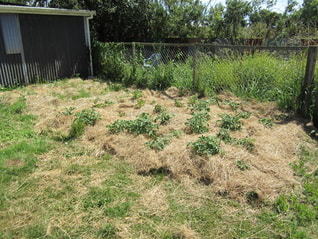 February | 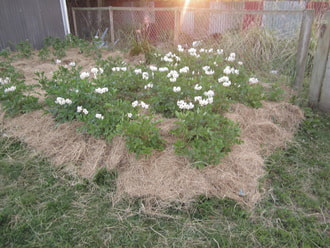 March | 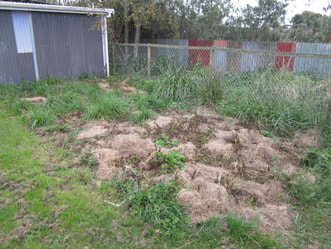 April - all dead |
While there are actually lots of different psyllids, with different host plants, many of which have been around for a long time in NZ, tomato-potato psyllid is a relative newcomer, thought to have arrived here in about 2005. It has since spread around the country, feasting on crops from the Solanaceae and Convolvulaceae plant families, and overwintering on cold-hardy types of these and a few selected other species. For the purposes of this article, whenever I refer to psyllid or TPP, I'm referring to tomato-potato psyllid.
By late 2013 my fledging new garden was well established, and for the 2013-2014 summer I planted several beds in various varieties of tomatoes, keen to grow plenty for preserving as well as eating fresh. They were all doing well, as was the big patch of spuds I had growing nearby, until on the 8th of Jan 2014 I noticed a small lesion on one potato plant...subsequent investigation led me to identify TPP. By March 2014, pretty much all the spuds and tomatoes were a write off. For more see the info and photos later in the article HERE.
In the process of trying to stop the psyllid that year, I tried:
In the process of trying to stop the psyllid that year, I tried:
- Removing and burning leaves with any bugs on them. The larvae don't move fast, but the adults are tiny, airbourne and leap about very quickly. The eggs are also minute and you only have to miss a couple.....so while this helped slow them slightly, it was pretty much a losing battle from the get-go.
- Remove and destroy leaves with signs of disease. The TPP are sucking insects, which can weaken a plant, but their biggest threat is that they carry certain infections which are injected into the plants by their sucking mouthpieces, quickly spreading throughout the plant and making it sick. Removing some leaves will not change the systemic disease.
- Spray with Maverick - the only spray at the time claiming to be effective against psyllid. This knocked back the population following each spray, but they soon recovered. I would have had to spray every 2 weeks throughout the season - and since my aim was to grow organic food, as free of chemicals and sprays etc as possible, this didn't fit with my whole reason for growing my own, so I stopped doing it. Others use different sprays - but the situation is the same - you have to keep doing it.
- Use neem granules and sprays and/or pyrethrum and/or diatomaceous earth - like the synthetic sprays, the effect was temporary. And with some research, I am not convinced that these products are wise to use on edible crops - neem comes with warning labels not to do so. They are also harmful to beneficial organisms. So I stopped using those too.
- Encouraging predatory insects - by avoiding sprays, growing lots of flowers etc etc. Both lacewings and ladybugs moved in and did feed on the larvae, though it was later in the process by the time their numbers built up, and the plants were already too sick to be really saved. It gave me new respect for the role of beneficial insects in the garden though, which I carried through to subsequent garden seasons, with very positive results not just against TPP but other pests as well.
- I read about Wondermesh, a type of fine quarantine cloth intended to protect crops from TPP (among other things), and ordered some to try using on subsequent crops, though obviously it was too late for these crops. Once the plants are infested by either the bugs or the diseases they bring, covering them would only create a nice haven for the bugs to flourish in, and speed the demise of your plants. Mesh needs to be used to exclude them from ever reaching the plant in the first place. More on that below.
Subsequent experiences, observation and learning
In early 2015, I had a different bed in my garden planted with some tomatoes, mostly to see what would happen. Sure enough, they got TPP as well - which led to the article I wrote documenting them. I ended up initially removing the worst affected plant, and trying to control it manually on the others, to see what would happen. The outcomes for these plants weren't good, and I ended up removing all of them.
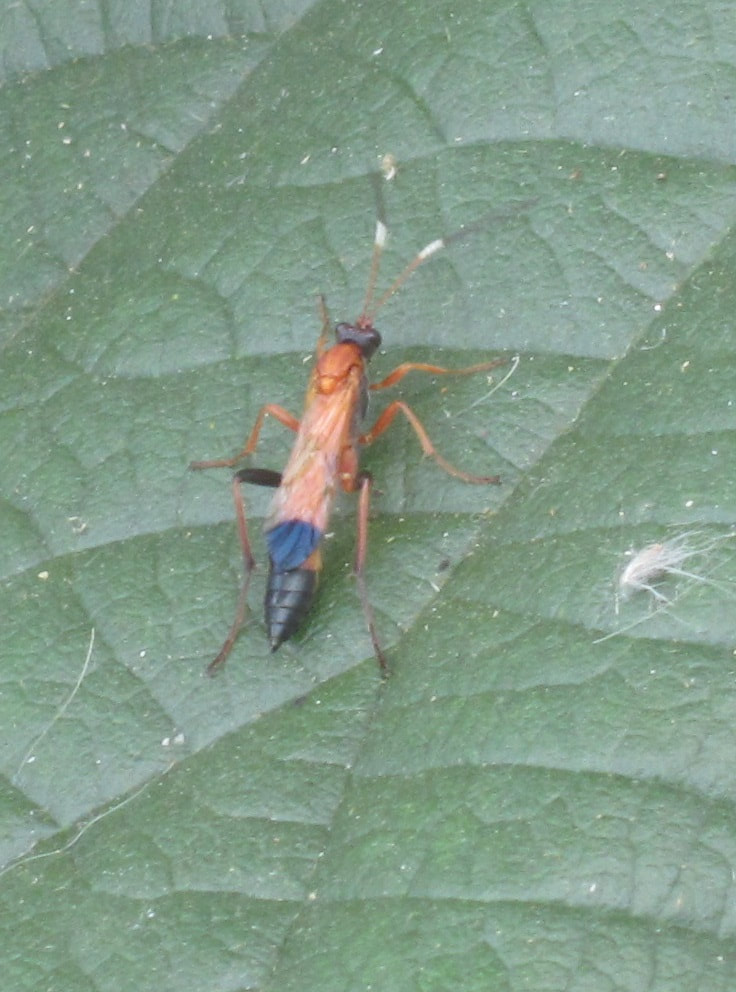
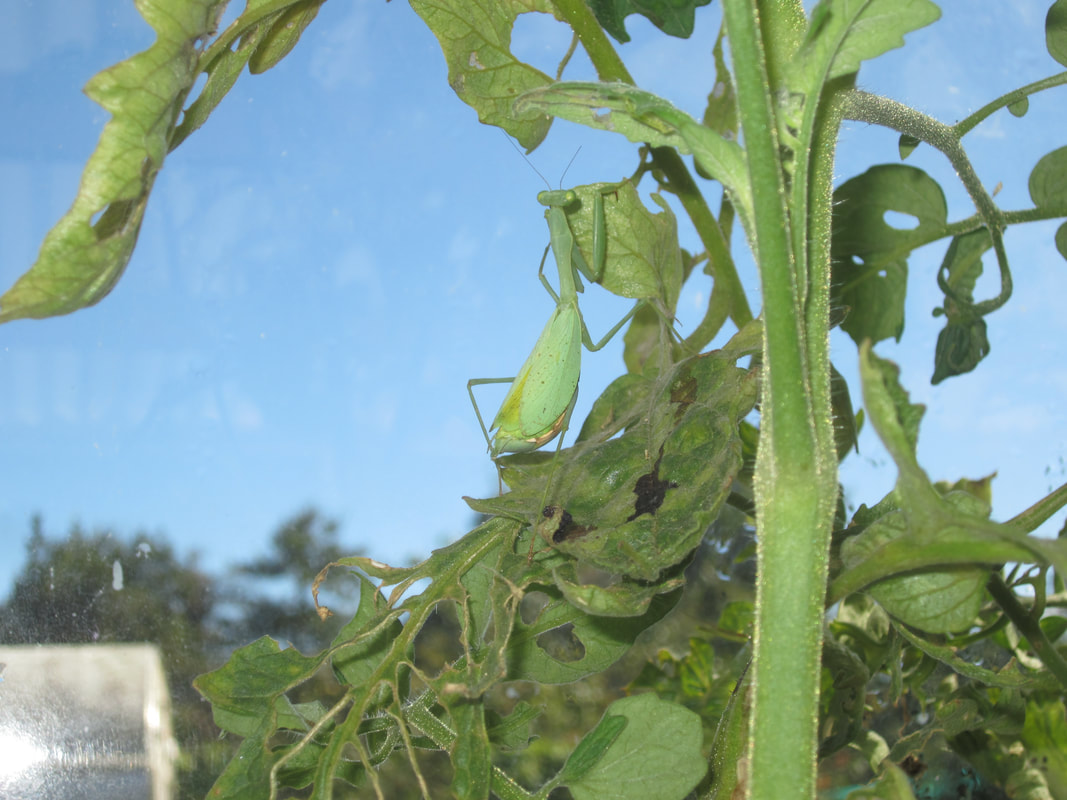
However, of more interest, at the same time I happened to be doing an experiment in my glasshouse, growing 25 tomatoes plants in buckets (to see what growing medium was best). I took no measures against TPP to protect those plants, and yet NONE of them ever got TPP. Just outside the glasshouse were other potted plants of capsicum, kumara etc, all of which got TPP. The glasshouse is home-made from recycled windows, and all summer I kept the doors and windows open to prevent overheating. Yet no plants insider the glasshouse ever got TPP. I did a little research and concluded that the high temps in the glasshouse (despite the open windows) were sufficient to either make it a place they didn't want to venture in the first place, or to disrupt their breeding cycle. I did have other pests in the greenhouse - especially green looper caterpillars - but observed the predatory insects that were moving in and controlling them, so made a point of also planting in there to encourage such friends - providing them with food, water, shelter etc etc. Predatory wasps, praying mantis, ladybugs, lacewings, harvestmen, hoverflies and more all did a great job of controlling various bugs in my greenhouse.
I've grown tomatoes and related crops in my glasshouse every year since, and never, ever had a psyllid problem on any of them.
However, of more interest, at the same time I happened to be doing an experiment in my glasshouse, growing 25 tomatoes plants in buckets (to see what growing medium was best). I took no measures against TPP to protect those plants, and yet NONE of them ever got TPP. Just outside the glasshouse were other potted plants of capsicum, kumara etc, all of which got TPP. The glasshouse is home-made from recycled windows, and all summer I kept the doors and windows open to prevent overheating. Yet no plants insider the glasshouse ever got TPP. I did a little research and concluded that the high temps in the glasshouse (despite the open windows) were sufficient to either make it a place they didn't want to venture in the first place, or to disrupt their breeding cycle. I did have other pests in the greenhouse - especially green looper caterpillars - but observed the predatory insects that were moving in and controlling them, so made a point of also planting in there to encourage such friends - providing them with food, water, shelter etc etc. Predatory wasps, praying mantis, ladybugs, lacewings, harvestmen, hoverflies and more all did a great job of controlling various bugs in my greenhouse.
I've grown tomatoes and related crops in my glasshouse every year since, and never, ever had a psyllid problem on any of them.
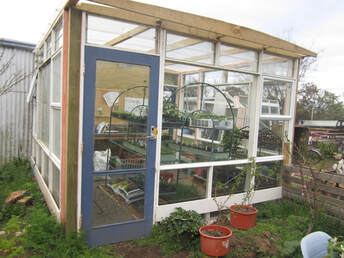
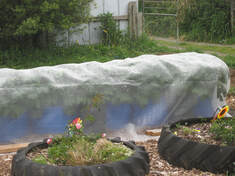
Meanwhile, out in the garden I decided to plant potatoes in half-barrels - again I was experimenting with different varieties etc - and to cover the barrels in Wondermesh to keep out TPP. Unfortunately, as the plants grew taller and taller, the mesh was harder to anchor down, and our high winds lifted it a number of times - ultimately those plants did get psyllid, though later in the season. I had ok-ish harvests from them, but nothing to write home about.
I have neighbours who are professional gardeners, and who grows a lot of their own food, and has done so for decades. He told me many times that it was "impossible" to grow good potatoes in our soils, and given the space they take up etc, I was becoming disinclined to put much time or effort into growing spuds for a while. However, in my quest to overcome TPP in other crops, I did keep researching for options.
One day I stumbled across a research article looking at the effects of TPP-related bacterial infection on the growing of commercial potato crops. (Unfortunately I can't find the original article to link it here at this time). The point I noticed in the report was that when a potato crop has been infected by the Liberibacter disease which psyllid carry, and then potatoes from that crop are then replanted to grow subsequent crops, that these future crops are found (by testing) to have traces of the bacterium in them, but about 90% of the resulting potatoes will be asymptomatic - meaning that there will be little to no evidence of yellowing leaves, poor crops or zebra-striping (the horrible browning in the spuds that makes them look and taste awful) etc. It's as if the plant is immune. Hmmm....if 90% of potatoes were unaffected, then that would mean just throwing out about 1 spud in 10. Ah-hah! I felt an experiment coming on.....
So, I started with some bought potatoes (as I didn't have any saved spuds) as well as some Māori potatoes my neighbour gave me. I grew these in the garden, without protection, starting them earlier in the season to allow some (hopefully) reasonable growth before TPP hit, which it inevitably did. After the crop died off, I harvested spuds and replanted them. Every year since, I have kept these crops going - harvesting and replanting my own potatoes, and the results have been fascinating! What I have observed is:
One day I stumbled across a research article looking at the effects of TPP-related bacterial infection on the growing of commercial potato crops. (Unfortunately I can't find the original article to link it here at this time). The point I noticed in the report was that when a potato crop has been infected by the Liberibacter disease which psyllid carry, and then potatoes from that crop are then replanted to grow subsequent crops, that these future crops are found (by testing) to have traces of the bacterium in them, but about 90% of the resulting potatoes will be asymptomatic - meaning that there will be little to no evidence of yellowing leaves, poor crops or zebra-striping (the horrible browning in the spuds that makes them look and taste awful) etc. It's as if the plant is immune. Hmmm....if 90% of potatoes were unaffected, then that would mean just throwing out about 1 spud in 10. Ah-hah! I felt an experiment coming on.....
So, I started with some bought potatoes (as I didn't have any saved spuds) as well as some Māori potatoes my neighbour gave me. I grew these in the garden, without protection, starting them earlier in the season to allow some (hopefully) reasonable growth before TPP hit, which it inevitably did. After the crop died off, I harvested spuds and replanted them. Every year since, I have kept these crops going - harvesting and replanting my own potatoes, and the results have been fascinating! What I have observed is:
- Subsequent crops have grown well. In the first couple of seasons, I noted some mild infestations with TPP - but they would be there one day, and gone a couple of days later - instead of a rapidly building population of the bugs, I would notice a few on a leaf or two, and then they would simply vanish, and the plants would continue to flourish. The last few years I haven't been able to find any bugs on the plants at all.
- One year, a tomato plant popped up in the middle of the spud patch - likely from a seed in the homemade compost I had spread. I left it there to see what would happen. The plant got quite big, but then got completely hammered by TPP while the spuds all around it sailed on, unaffected.
- The longer I grow spuds in the SAME location, the better they do. Each season I replant the BEST potatoes after harvesting the crop, burying them in the ground and covering with compost and my usual mix of dolomite (for strong cell walls), organic blood and bone, and sulfate of potash. During the season I mulch/cover with lawn clippings. Watering helps too - you get bigger spuds if they are well watered (or there is plenty of rain). I expanded some extra spuds to a new bed this season, and they're not looking anywhere near as grand - though this will improve in time. I grow 5 varieties - as these are the ones I particularly like or do particularly well for me - no longer bothering with others.
- Meanwhile, my neighbour, once I taught him what TPP was, realised his garden has been infested annually, and has busily sprayed his crops every year, and every year complained about how badly they do. When I dug up 30kg of beautiful big spuds this year from a 3x1m plot and showed him, he finally decided he'd try things my way - I've given him some of my left over seed potato to plant and look forward to seeing how he does with them.
- I acknowledge that, if my plants are still carrying traces of the bacterium (no way of knowing without scientific testing), then they can potentially be a source of that bacterium to be picked up by any TPP that visit my plants and then move on to other crops. But after considering this and weighing it up, I decided that I can live with that - TPP is all around us (I live in a small town) - and the bugs will get it from other sources; my plants may or may not still have any absorbable bacteria in them, but seem to be ignored by the TPP anyway now. Plus I can actually grow potatoes to eat.
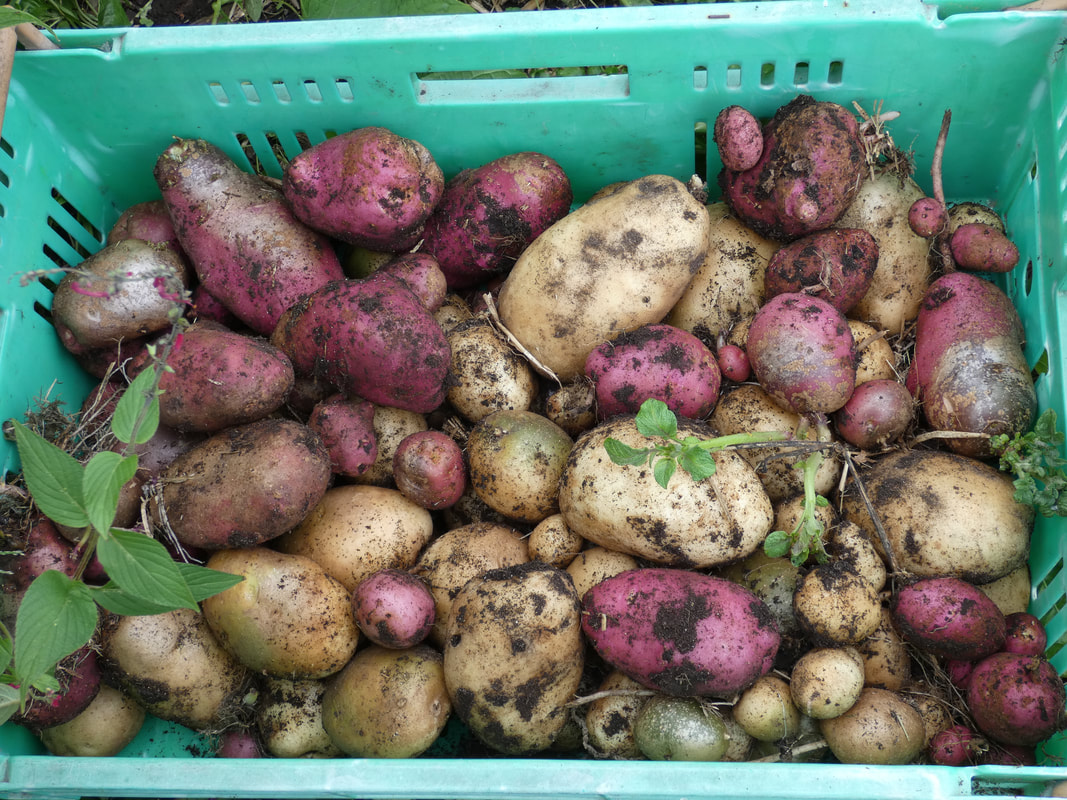 | 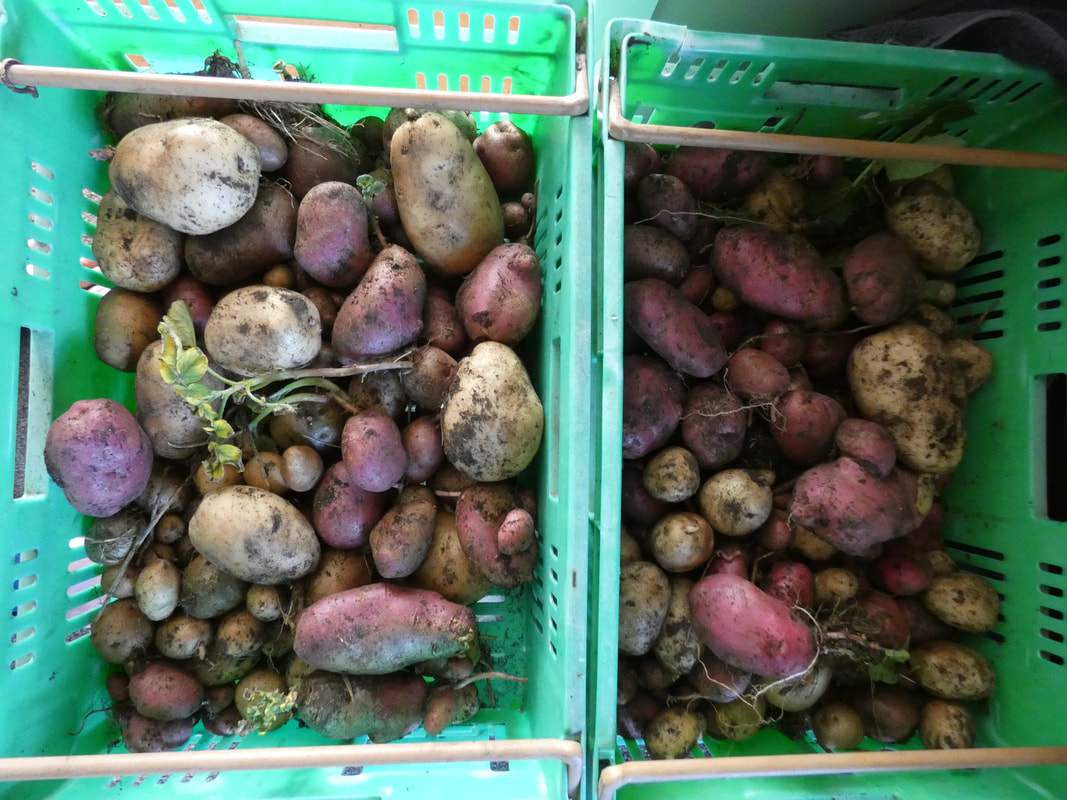 |
| The above 3 bins of spuds, totaling just under 30kg, came from the 3x1m patch you can see has been dug over in this photo. These ones are two varieties - a generic red potato, and a "low-carb" white potato, both of which I've been growing for a number of years, and are immune to TPP. Despite the suggested 90% ratio mentioned above, these days I never see any spuds I need to throw out. NOTE: the immunity works with potatoes because the plants are clones; growing from tubers means you're continually growing the same plants. It doesn't work the same with tomatoes which are grown from seed. | 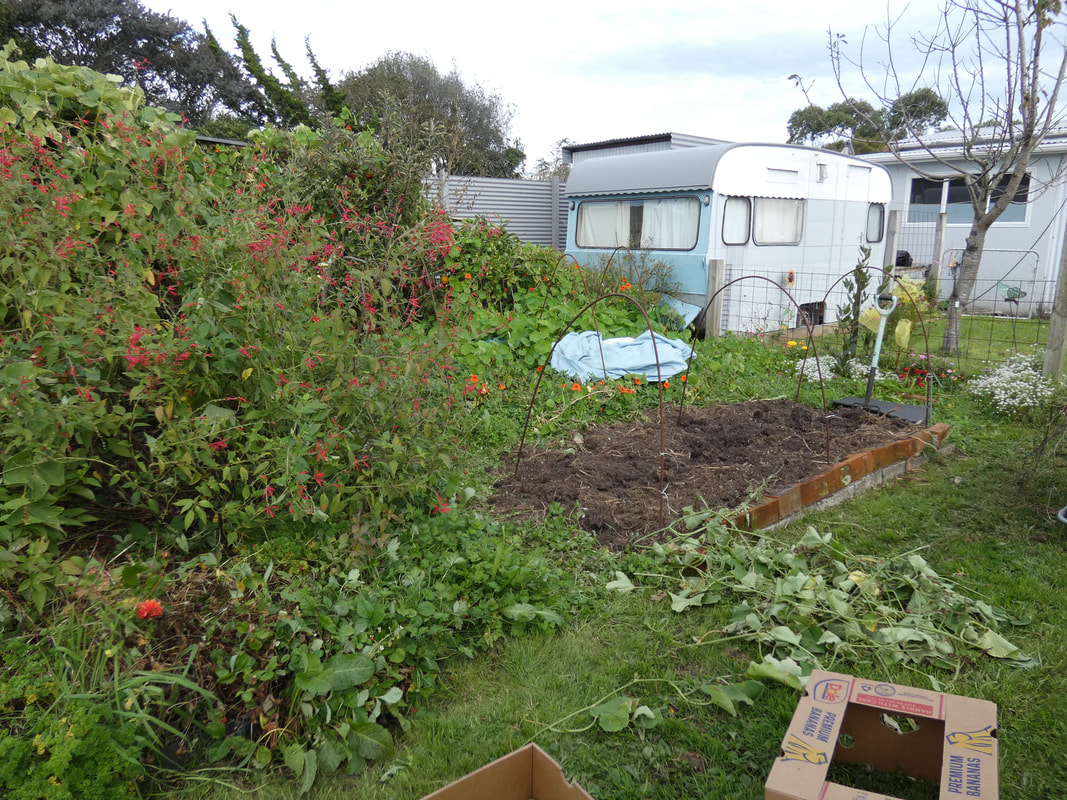 |
Another often recommended tip is to grow crops as early as possible in the season, to avoid the peak psyllid times (they only really proliferate once temps get higher, which in my garden is January onwards). However, where I am, it's too cold to plant out tomatoes etc until late November at the earliest, and so this has not been an effective strategy for me, for the most part. If you're in other parts of the country, however, it's worth bearing in mind. Growing tomatoes and related plants early or late in the season may be a way to avoid the worst effects of psyllid.
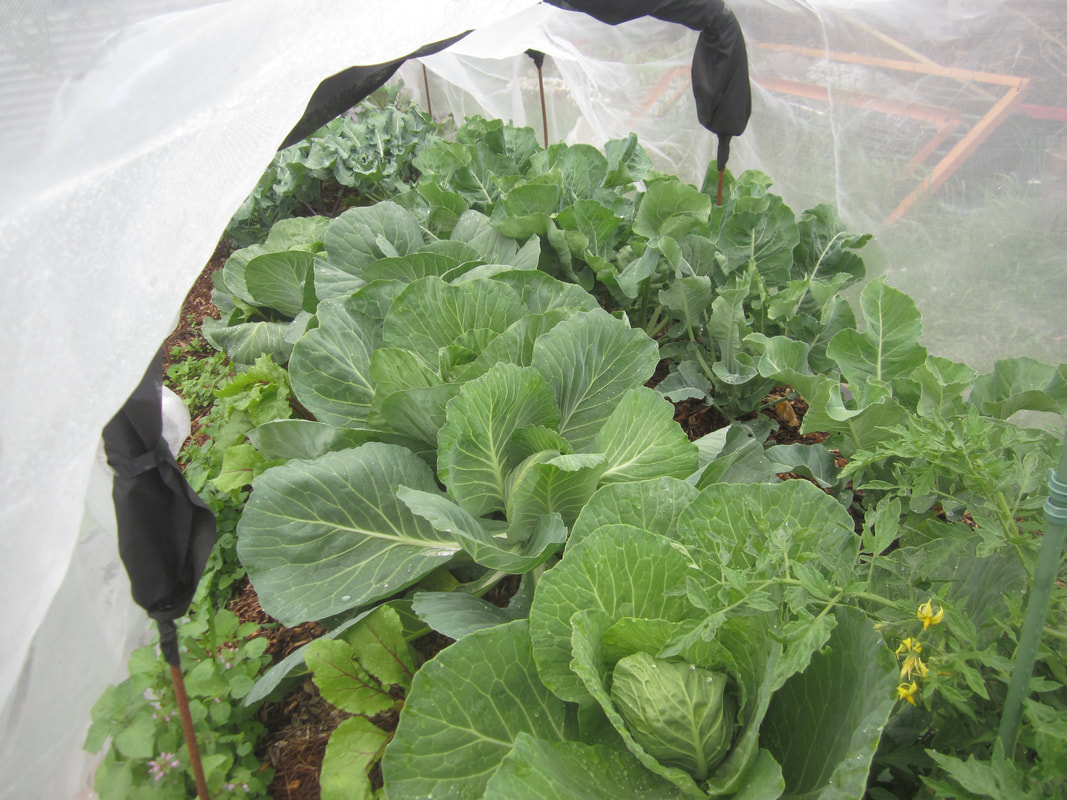
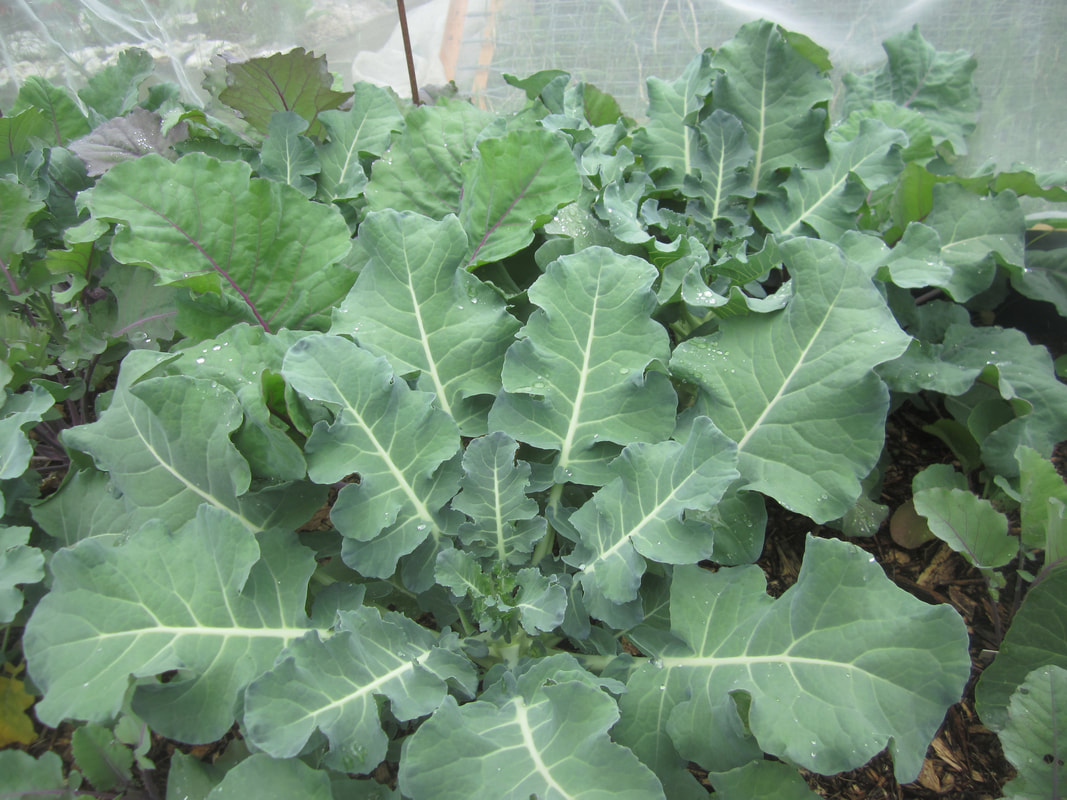
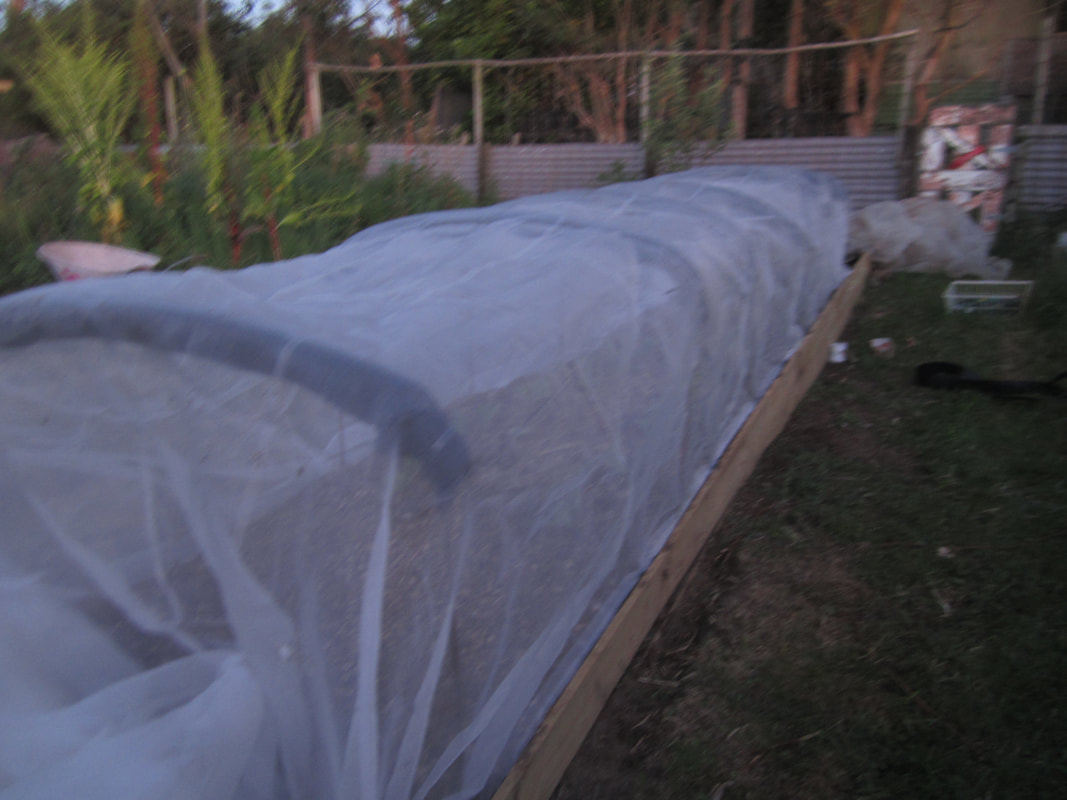
Another thing I did, though it was mostly accidental to start with, was grow bush tomatoes in the garden, under Wondermesh. This started because I had all that mesh I'd bought, and wanted to put it to use. I set up a garden bed one spring with metal hoops over it, covered in mesh, and planted brassicas and beetroot under it, figuring it would give them a little protection from late frosts that would slow their growth and would also prevent white butterflies once they started up. Turned out that it created a most wonderful microclimate which those plants thrived in, and I started harvesting good sized heads of brassicas within 6-8 weeks!
More to the point for the focus of this article, I happened to have planted a couple of Russian Silvery Fir bush tomatoes at one end under the mesh. I'd been trying to grow these for several years - every year they'd start off great then turn their toes up for no apparent reason quite suddenly. I'd tried them in the greenhouse, in buckets, in the ground, outside etc. They are a pretty plant with very fine fern-like leaves compared to other tomatoes, and I concluded they were prima donnas. I was giving them one last shot that year before tossing the rest of the seed out, and happened to have some space at the end of the row under the mesh, so bunged a couple of plants in. Well, they LOVED it! They grew and flourished and I was picking bowl after bowl of large, juicy fruit from them.
Growing vining (indeterminate) varieties of tomatoes under mesh is a bit tricky - unless one manages to build an entire, mesh covered, walk-in structure (believe me, I've wanted to!), then there are issues for vining tomatoes of needing a set up where the plants can be regularly accessed for training and pruning as well as harvest, having the height for their stakes/trellis or whatever, and not lifting the mesh often for access, potentially allowing TPP in. Yes, you can potentially just grow them on the ground, with mesh over, and let them do their thing, but I find slugs and snails are very grateful for all the juicy fruit lying about, and I'm not keen on that. So, I was sticking to growing vining tomatoes in my greenhouse.
However, bush type (determinate) tomatoes, only grow to a certain height, don't need pruning and training (though do need some support for heavier fruit types) etc - so they are perfect to grow under mesh.
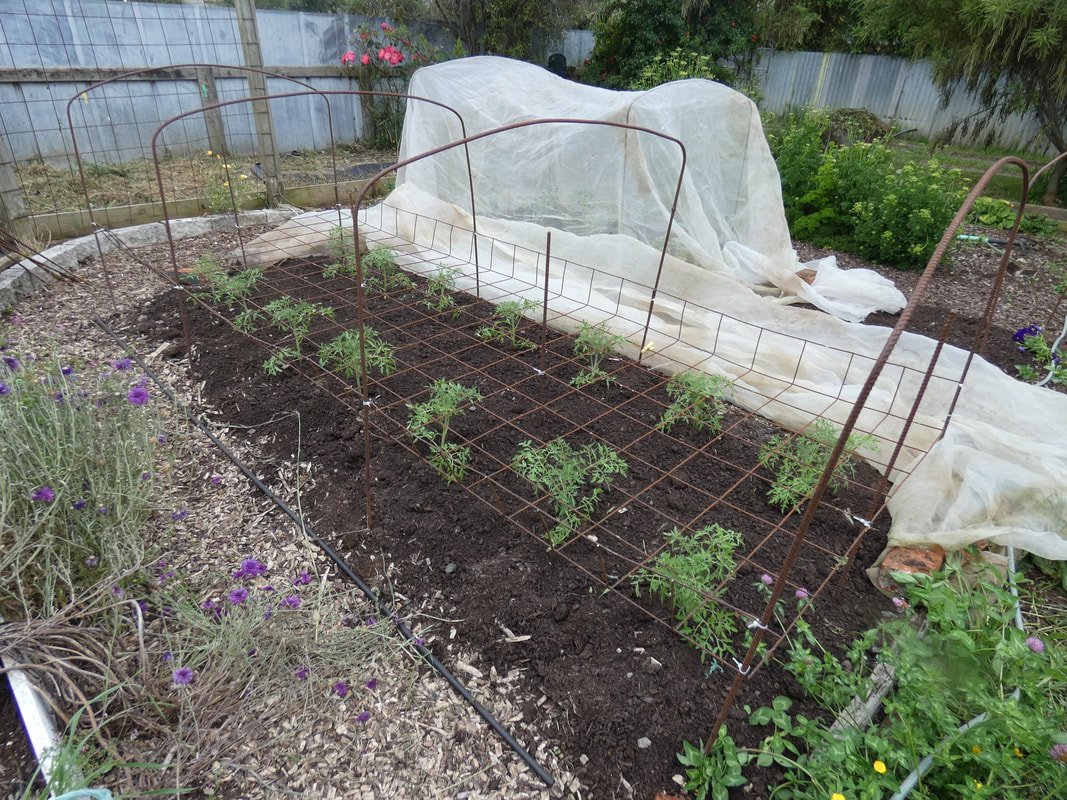
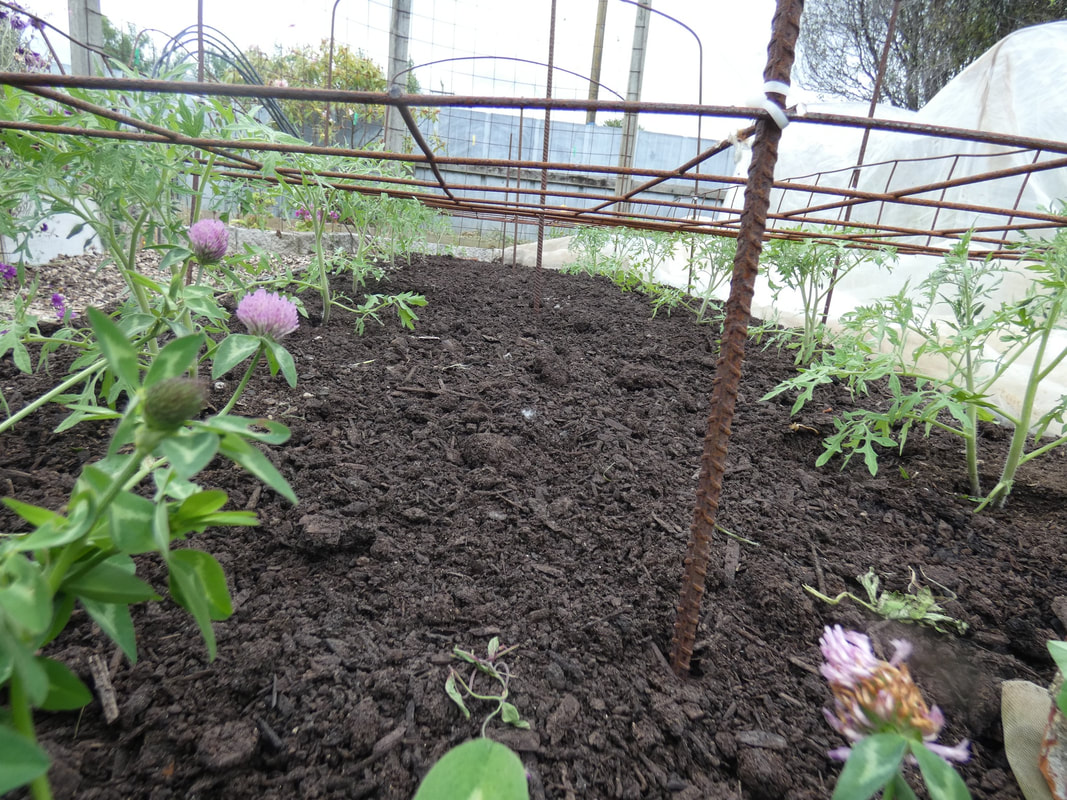
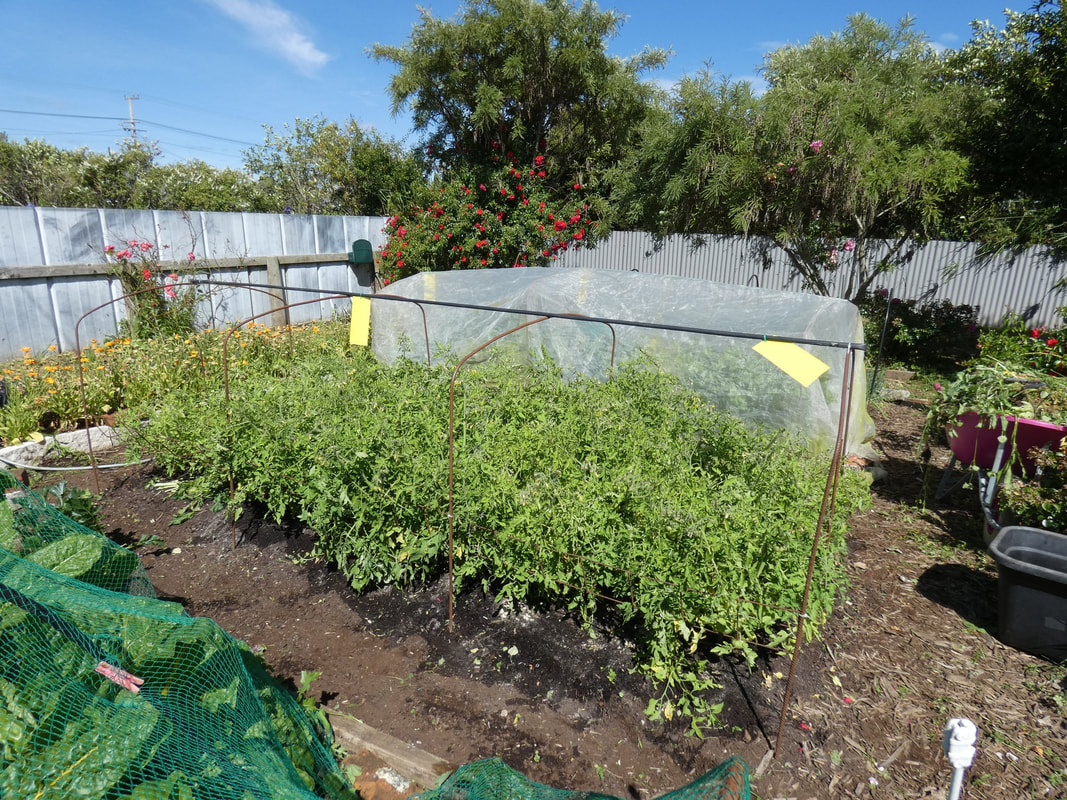
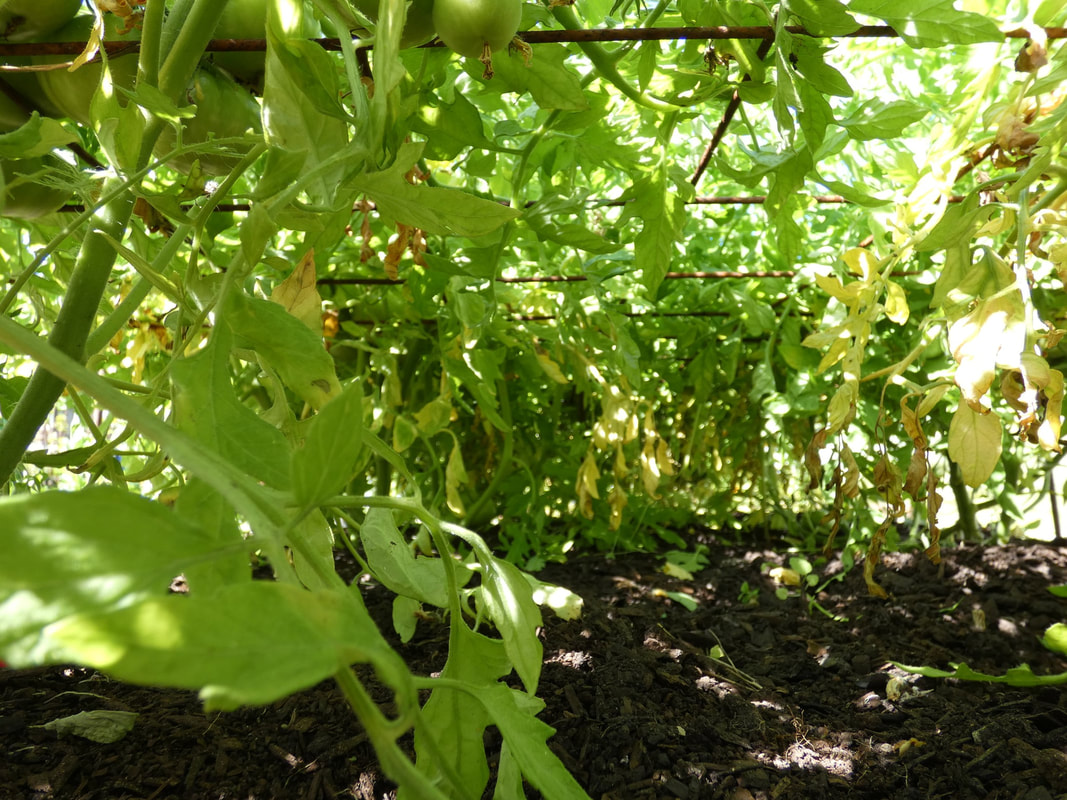
Every year since the above, I've grown Silvery Fir bush tomatoes under mesh in my garden. The last 2 seasons I harvested 94kg from 14 plants and 80kg from 12 plants respectively (each in a bed 1.25m wide by about 3m long). I've developed a set up where I have horizontal steel mesh they can grow up and through, so that once the fruit form, the weight of the plants lays them down over the mesh but keeps the fruit off the ground, with the whole lot under steel hoops about a metre or so high, covered in mesh which is weighted down on the sides and ends. I only need to lift the lower part in sections a couple of times to pull weeds from around the base of the plants, and then uncover later in the season when I begin harvesting (and recover between pickings).
I will continue to grow bush type tomatoes under mesh covered hoops in my garden - where they flourish in the microclimate and are protected from both pests and birds. The one caveat on that is this - if aphids or whitefly get in under the mesh, then they can quickly get out of control since their predators can't reach them. I don't usually find this a problem on the tomatoes, but it is for brassicas. Anyway, I've started adding a few sticky yellow cards hung from the top rails under the mesh to the beds to catch any small pests flying about before they become a problem.
Another thing I did, though it was mostly accidental to start with, was grow bush tomatoes in the garden, under Wondermesh. This started because I had all that mesh I'd bought, and wanted to put it to use. I set up a garden bed one spring with metal hoops over it, covered in mesh, and planted brassicas and beetroot under it, figuring it would give them a little protection from late frosts that would slow their growth and would also prevent white butterflies once they started up. Turned out that it created a most wonderful microclimate which those plants thrived in, and I started harvesting good sized heads of brassicas within 6-8 weeks!
More to the point for the focus of this article, I happened to have planted a couple of Russian Silvery Fir bush tomatoes at one end under the mesh. I'd been trying to grow these for several years - every year they'd start off great then turn their toes up for no apparent reason quite suddenly. I'd tried them in the greenhouse, in buckets, in the ground, outside etc. They are a pretty plant with very fine fern-like leaves compared to other tomatoes, and I concluded they were prima donnas. I was giving them one last shot that year before tossing the rest of the seed out, and happened to have some space at the end of the row under the mesh, so bunged a couple of plants in. Well, they LOVED it! They grew and flourished and I was picking bowl after bowl of large, juicy fruit from them.
Growing vining (indeterminate) varieties of tomatoes under mesh is a bit tricky - unless one manages to build an entire, mesh covered, walk-in structure (believe me, I've wanted to!), then there are issues for vining tomatoes of needing a set up where the plants can be regularly accessed for training and pruning as well as harvest, having the height for their stakes/trellis or whatever, and not lifting the mesh often for access, potentially allowing TPP in. Yes, you can potentially just grow them on the ground, with mesh over, and let them do their thing, but I find slugs and snails are very grateful for all the juicy fruit lying about, and I'm not keen on that. So, I was sticking to growing vining tomatoes in my greenhouse.
However, bush type (determinate) tomatoes, only grow to a certain height, don't need pruning and training (though do need some support for heavier fruit types) etc - so they are perfect to grow under mesh.
Every year since the above, I've grown Silvery Fir bush tomatoes under mesh in my garden. The last 2 seasons I harvested 94kg from 14 plants and 80kg from 12 plants respectively (each in a bed 1.25m wide by about 3m long). I've developed a set up where I have horizontal steel mesh they can grow up and through, so that once the fruit form, the weight of the plants lays them down over the mesh but keeps the fruit off the ground, with the whole lot under steel hoops about a metre or so high, covered in mesh which is weighted down on the sides and ends. I only need to lift the lower part in sections a couple of times to pull weeds from around the base of the plants, and then uncover later in the season when I begin harvesting (and recover between pickings).
I will continue to grow bush type tomatoes under mesh covered hoops in my garden - where they flourish in the microclimate and are protected from both pests and birds. The one caveat on that is this - if aphids or whitefly get in under the mesh, then they can quickly get out of control since their predators can't reach them. I don't usually find this a problem on the tomatoes, but it is for brassicas. Anyway, I've started adding a few sticky yellow cards hung from the top rails under the mesh to the beds to catch any small pests flying about before they become a problem.
 |  |
 |  |
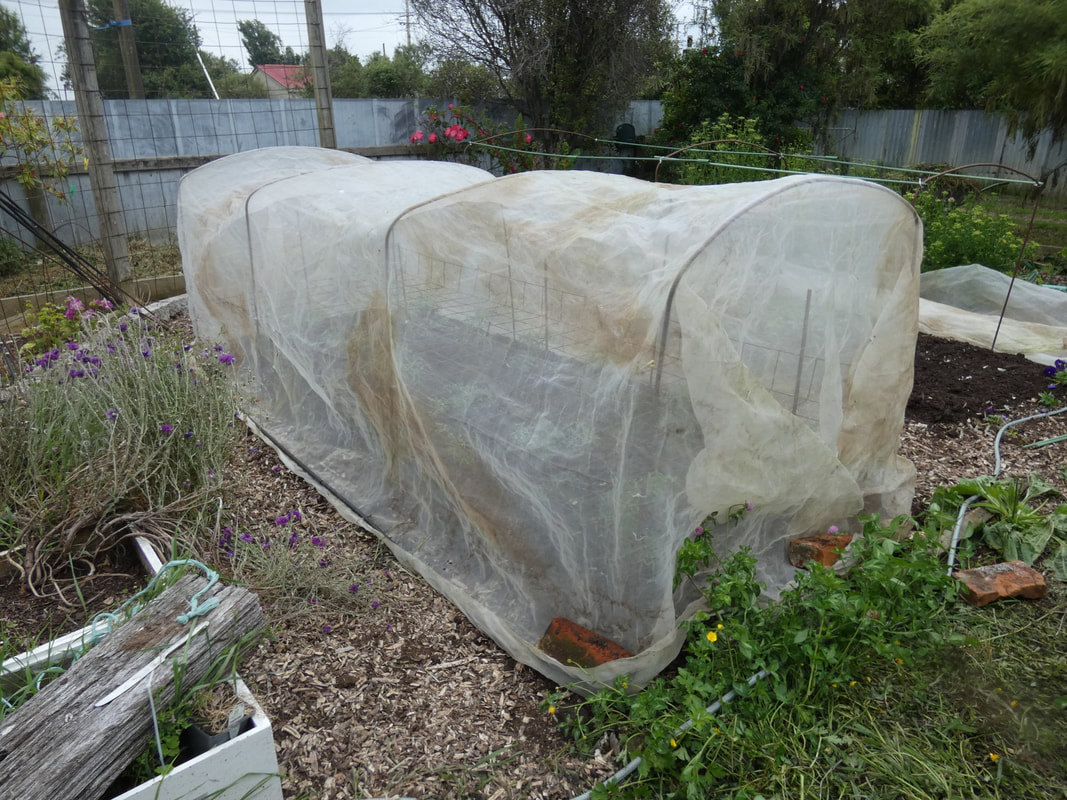 | 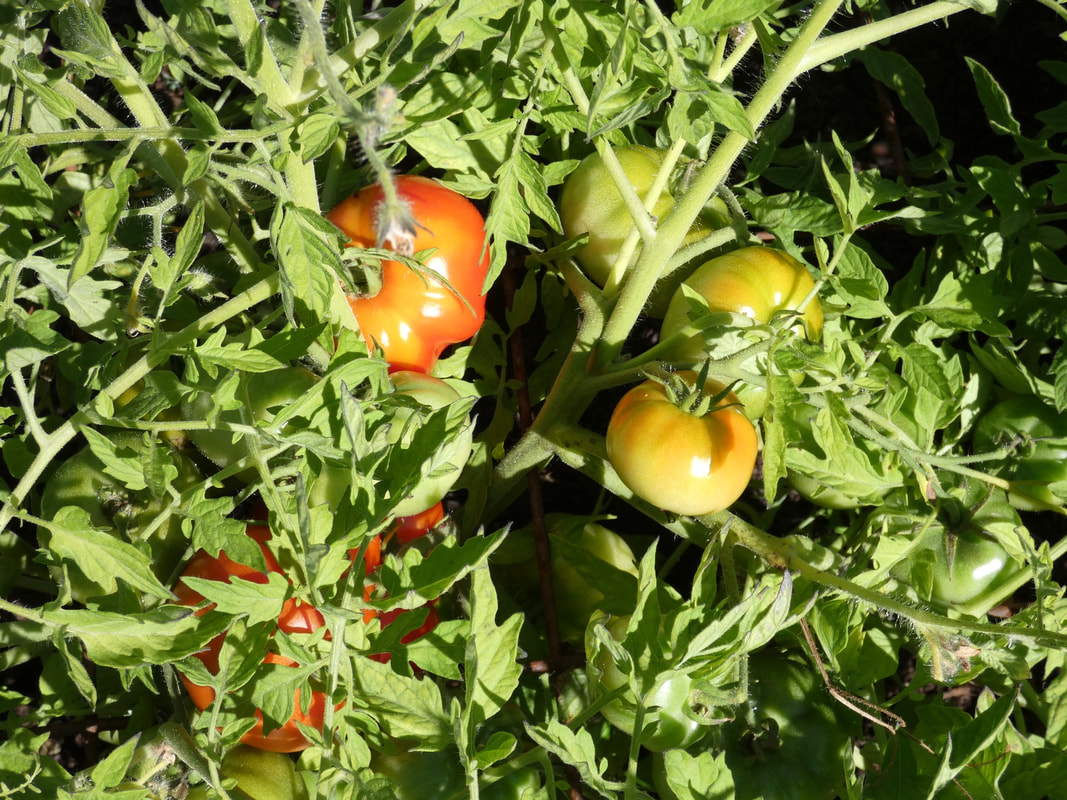 |
| In the above photos you can see my set up for the bush tomatoes - a horizontal piece of reinforcing mesh is suspended using cable ties, a little over the height of a brick standing on end above the ground, on the main hoops (made from bending 10mm rebar) and the plants are set out below the centre of holes in the mesh. As they grow, they come up and through the mesh, and then as the fruit form, the mesh holds the branches up off the ground. Wondermesh is used to cover the beds. I've harvested 80-95kg of tomatoes from this size bed, depending on the number of plants grown (12-14). I'm growing Russian Silvery Fir here, but the same principals would work for other bush tomatoes, which may or may not need the horizontal support, depending on fruit size relative to plant strength. |  |
Why TPP is no longer of real concern to me
After discovering TPP in my garden in late 2013, I had about 3 really bad years where it seemed no matter what I did, everything (related) was wiped out by these voracious pests. But then it seemed as if they were no longer a problem. For a bit I imagined they'd just moved on from my garden, but that didn't make sense since my neighbour had lots of them, and other gardeners around town were becoming familiar with and identifying the pest everywhere. It took me a while to realise it was because of the cumulative effect of the changes I was making that tomato-potato psyllid were simply not a big deal for me anymore. Yes, they're still there, and yes, if I set out vulnerable crops in the garden without any measures of protection, it's likely to be an issue. But I don't do that, and am no longer particularly concerned by them. What I do do (and plan to do) is:
- Continue to grow potatoes from my own saved spuds each year - as they are immune. If I want to introduce a new variety, I will do so, accepting that the first year's crop will be "sacrificial" and that I will then build up healthy crops in subsequent seasons.
- Continue to grow bush tomatoes under mesh in my garden, producing enough for our preserving needs. Because bush tomatoes produce more or less all at once, rather than slowly over the season, this also means only needing to do several harvests over a few weeks rather than daily for a prolonged time, which would be inconvenient under the mesh.
- Grow vining tomatoes for fresh picking/eating in the glasshouse.
- Grow capsicums, eggplants, pepino etc in the glasshouse. I may also plant some in the garden, under mesh, though probably not until next year, as life mean I'm doing limited gardening this season.
- I grow kumara in containers outdoors and don't protect them - while TPP will target them, they seem to do limited damage with this crop, so it's not worth fussing about.
- Diligently remove nightshades and other weeds that host TPP and survive winter frosts in my garden.
- Continue to plant herbs and flowers and provide habitat etc that supports and attracts beneficial organisms.
- Continue to feed my garden beds with compost, mulches, and selected natural additives, while limiting digging, to enhance and protect soil and microbes and therefore plant health and resistance to pests and diseases.
- Avoid spraying, as this is harmful to beneficials as well as pests. The only spray I use is a natural biological agent against codling moth in early summer.
- Continue to spend time observing and experimenting - so that I can note what works and repeat it, and what doesn't and change it.
Conclusion
Tomato-potato psyllid are a major pest for gardeners. However, by learning to understand this pest (know thy enemy!) and modifying some of your gardening techniques and choices, it, like any other major pest, can be overcome - or at least controlled to where it's no longer causing you despair, without resorting to lots of chemicals or other drastic options. Observation and applying what works are two important tools in the garden - and the goal should be to make life easier, not harder, for yourself, while producing lots of yummy, healthy food.
TPP does not have to wreck your garden or your sanity! So hang in there, try some new ideas, and see how it goes. As I have found, there is hope after TPP!
TPP does not have to wreck your garden or your sanity! So hang in there, try some new ideas, and see how it goes. As I have found, there is hope after TPP!
 RSS Feed
